
Grahame Morris MP Working for Easington
Sunday 31st May 2026
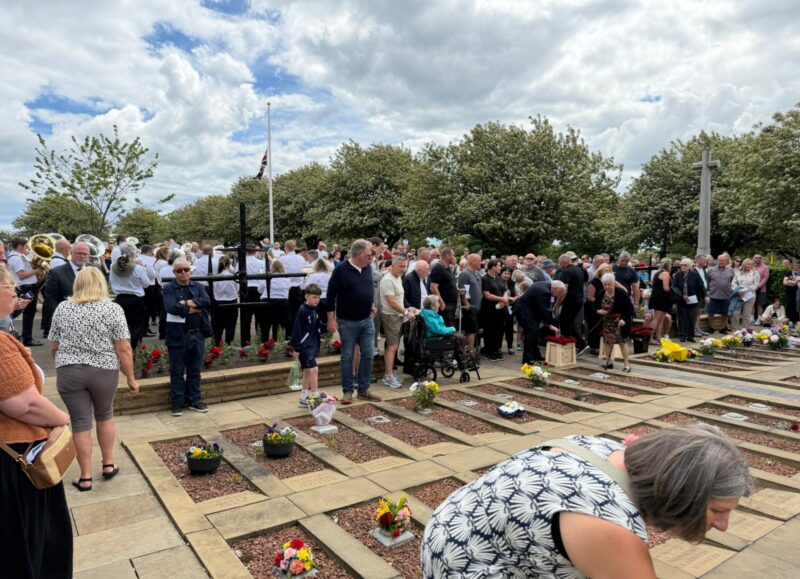
Speech: Easington Pit Disaster 75th Anniversary
I want to thank everyone involved in organising today’s commemoration, particularly Alan Cummings, the Easington Banner Committee, and Easington Colliery Parish Council.
I would also like to give special thanks to the Parish Council’s Grounds Team. As we will see shortly, their hard work, care, and dedication throughout the year ensure that the memorials and graves of those lost in the Easington Pit Disaster are maintained with the dignity and respect they deserve.
Seventy-five years ago, on Tuesday 29 May 1951, life in this community changed forever.
At 4.20am, a spark ignited firedamp, causing an explosion in the Duck Bill district of the Five Quarter seam, 900 feet beneath where we stand today.
From the youngest miner, Matthew Williams, aged just 18, to Frederick Ernest Jepson, the oldest at 68, Easington lost 81 fathers, sons, brothers, friends, neighbours, and comrades.
In the days that followed, there was further tragedy with the loss of two brave rescue workers, Henry Burdess and Jack Young Wallace, who were overcome by noxious gas.
Families of the missing men kept a ceaseless vigil at the pithead, hoping for news that their loved ones might yet be rescued. But the scale of the disaster soon made it heartbreakingly clear that there was no hope of survival.
It is difficult to truly comprehend the enormity of what happened, or the depth of grief felt across this community. An editorial in the Sunderland Echo, published two days after the disaster, wrote:
“Easington Colliery is to-day a village without hope. In little colliery houses in almost every street women are mourning the loss of some relation.”
We gather today not simply to remember a disaster, but to honour the memories and lives of those we lost.
The men we remember today were ordinary working people doing extraordinarily hard and dangerous work. Remembering them reminds us that the prosperity and freedoms enjoyed by later generations were built on the labour and sacrifice of communities like Easington.
The coal industry was crucial in creating our nation’s wealth. It fuelled the fires of the industrial revolution, sustained us through two world wars, and post-war enabled the growth of new sectors in finance and the City. There is no doubt this country owes the mining communities a debt of honour and gratitude.
Our local cultural, heritage and history were built on coal, from our brass bands and miners banners, to our parks, sports teams and social welfares.
It is difficult for those who were not born into mining communities to understand that mining was not simply a job, or an industry, it was a way of life which shaped every aspect of our community and society.
The bonds of comradeship and solidarity, were built and shaped at the coalface, and it was the values forged underground, which shaped our community on the surface.
These values would not only shape our community, but would transform our society, from establishing our first trade unions to advocating for political causes that we still benefit from today, from public holidays, the right to vote, to social security and the welfare state.
However, we paid a heavy price with legacy of industrial disease, injury, and tragic disasters, and these risks were known as an editorial from the Sunderland Echo the day following the disaster set out.
“This disaster at Easington, the worst that the Durham mining industry has suffered for many years, is yet one more of the periodical reminders of the heavy price in human life that is paid for the coal our miners produce. In taking so much of the output that is undoubtedly needed we tend to forget the risks and dangers that are inherent in the miner’s occupation, risks which, he cheerfully takes and sometimes, maybe, makes too light of. The recurring loss of so many useful lives, and the anguish and suffering it brings, forces everyone to consider whether still more cannot be done to make the mines safer.”
Yet despite that loss and hardship, communities like Easington endured.
They endured because of the strength, resilience, and solidarity of our people, values that still define this community today.
Seventy-five years on, we remember not only how these men died, but how they lived: with courage, dignity, comradeship, and an unbreakable sense of duty to one another and to their families.
It is our responsibility to ensure that future generations continue to know their stories, understand their sacrifice, and appreciate the contribution that mining communities made to our country.
So today, as we stand together in remembrance, we honour the 83 men who lost their lives, we honour the families who carried that grief, and we honour a community whose spirit could never be broken.
May they rest in peace, and may their memory live on forever in Easington.